Underrated AI Side Hustles in 2026 (Low Competition, High Profit Worldwide)
The global AI boom is creating massive income opportunities. While most people chase saturated ideas, smart creators are tapping into low-competition AI side hustles that work from anywhere in the world.
If your goal is to make money online globally in 2026, this guide reveals powerful, untapped opportunities.
🌍 Explore more global income strategies on
Shubscribe
1. AI Prompt Marketplace Selling
Create and sell prompts for AI tools on platforms like
PromptBase or marketplaces for creators.
2. AI Thumbnail Design Service
YouTube is global. Offer high-converting thumbnails using AI tools and sell services on freelance platforms.
3. AI Automation for Businesses
Businesses worldwide are adopting automation. Offer chatbot setup, email automation, and AI workflows.
Artificial intelligence is transforming how people work online. One of the most powerful new skills emerging from the AI revolution is prompt engineering. In 2026, businesses, creators, and developers are paying real money for well-crafted prompts that generate better results from AI systems.
If you’re looking for a modern AI side hustle, learning prompt engineering can become a surprisingly profitable opportunity. From selling prompts online to building automation tools, this skill can generate steady digital income.
Prompt engineering is the practice of designing structured instructions that guide AI systems to generate high-quality outputs. These prompts can be used for writing articles, generating code, creating images, designing marketing campaigns, and much more.
Platforms like OpenAI, Anthropic, and HuggingFace are driving massive adoption of AI tools across industries.
However, most people still struggle to write prompts that produce consistent results. This creates an opportunity for skilled prompt engineers to monetize their expertise.
Why Prompt Engineering is Profitable in 2026
The AI economy is expanding rapidly. Businesses are adopting AI to reduce costs, automate content creation, and accelerate product development.
According to research from McKinsey, AI adoption is expected to add trillions of dollars to the global economy.
As companies adopt AI tools, they need specialists who can optimize prompts for tasks such as:
Marketing copy generation
SEO article creation
AI image generation
Automated coding
Customer support automation
This demand is why prompt engineering is becoming one of the most promising AI side income opportunities in 2026.
5 Ways to Make Money with Prompt Engineering
1. Sell Prompts on Marketplaces
Online marketplaces allow creators to sell high-quality prompts. Some popular platforms include:
Some prompt engineers earn hundreds of dollars per project.
4. Build AI Automation Tools
Prompt engineering can power automation workflows using tools like:
Zapier AI automation
ChatGPT API integrations
AI customer support bots
Automation products can become scalable digital businesses.
5. Create AI Content Products
You can also monetize prompts by building AI-generated products such as:
ebooks
blog templates
course materials
marketing frameworks
Many creators use this strategy to build passive income streams.
Best AI Tools for Prompt Engineers
To succeed in prompt engineering, it helps to master the most powerful AI tools available today.
ChatGPT
Claude AI
Midjourney
DALL-E
Stable Diffusion
Experimenting with different models helps prompt engineers understand how AI responds to various instructions.
How to Build a $1000/Month AI Side Income
Many beginners wonder if prompt engineering can actually generate real income. The answer is yes, but it requires consistency.
A simple strategy might look like this:
Sell 100 prompts at $10 each
Sell prompt bundles for $25
Offer freelance prompt optimization
Create digital AI prompt courses
By combining multiple revenue streams, it is possible to build a sustainable online income.
Future of Prompt Engineering
Prompt engineering will continue evolving as AI models become more advanced. In the future we may see specialized prompt roles such as:
AI marketing prompt specialists
AI coding prompt architects
AI automation designers
Early adopters who develop these skills now could benefit significantly as AI becomes a core part of every digital industry.
Frequently Asked Questions
What is prompt engineering?
Prompt engineering is the process of designing structured instructions that guide AI systems to generate high-quality responses.
Can you make money selling AI prompts?
Yes. Many creators earn money by selling prompts, prompt packs, automation workflows, and consulting services.
Is prompt engineering a good side hustle in 2026?
Prompt engineering is one of the fastest-growing AI skills and can generate side income through marketplaces, freelancing, and digital products.
Do you need coding skills for prompt engineering?
No. While coding can help with automation, many profitable prompts are created using simple structured instructions.
Final Thoughts
Prompt engineering is more than just a technical skill. It is becoming a powerful digital asset in the AI economy. As AI adoption grows, those who master prompt design can unlock multiple income opportunities.
If you’re interested in more AI trends, automation tools, and digital income strategies, explore more resources on Shubscribe.
How to Build a $1,000/Month AI Passive Income Stream in 2026
The rise of artificial intelligence has opened new opportunities for anyone to earn money online. In 2026, building an AI passive income stream is easier than ever before. With the right tools and strategy, beginners can generate consistent income with minimal effort.
If you are looking for AI passive income ideas 2026, this guide will show you practical strategies to reach your first $1,000 per month.
What is AI Passive Income?
AI passive income refers to using artificial intelligence tools to automate tasks that generate revenue. Instead of trading time for money, AI helps you create systems that work continuously.
Examples include:
AI generated blog content
Automated YouTube channels
AI generated digital products
Affiliate marketing automation
AI powered niche websites
The goal is to create assets once and let them generate recurring income.
Why AI Passive Income is Exploding in 2026
Several factors are driving the growth of AI passive income 2026 opportunities:
AI tools are easier to use
Content creation is faster
Automation reduces manual work
Online platforms support creators
According to industry research from McKinsey, AI automation is expected to transform digital businesses and productivity in the coming years.
Step-by-Step Plan to Build $1,000/Month AI Income
1. Choose a Profitable Niche
Your first step is selecting a niche with high demand. Good niches include:
Personal finance
Technology and AI
Health and wellness
Online business
Digital marketing
Picking the right niche increases your chances of generating steady traffic.
2. Create AI Generated Content
Content is the foundation of most passive income systems. AI tools help create articles, videos, and graphics quickly.
You can use AI to produce:
SEO blog posts
YouTube scripts
Social media content
Email newsletters
Consistent publishing builds authority and organic traffic.
3. Monetize With Multiple Income Streams
To reach $1,000 per month faster, combine several monetization methods:
Affiliate marketing
Ad revenue
Digital product sales
Online tools or templates
Even small earnings from each stream can grow into a stable income.
4. Build Digital Products With AI
AI can help you create digital products quickly:
Ebooks
Online courses
Design templates
Prompt libraries
Once created, these products can sell repeatedly with little maintenance.
5. Automate Your Workflow
Automation is key to making passive income truly passive.
Automation examples:
Schedule blog posts
Automate email marketing
Auto publish social media
Use AI chatbots
This reduces daily work while maintaining growth.
Best AI Passive Income Ideas 2026 (Minimal Effort)
Here are some beginner-friendly AI passive income ideas 2026 minimal effort strategies:
AI blogging websites
Faceless YouTube channels
AI generated niche tools
Affiliate niche websites
Printable digital downloads
Each of these can generate income with scalable automation.
Practical Tips for Success
Focus on SEO traffic
Create valuable content
Use automation wisely
Publish consistently
Diversify income sources
Many creators underestimate the power of consistency. Even small daily improvements can lead to large results.
Frequently Asked Questions
1. What is AI passive income?
AI passive income means earning money using automated AI tools that generate content, products, or services.
2. Can beginners make money with AI?
Yes. Many AI platforms allow beginners to create online businesses without technical skills.
3. How long does it take to earn $1000/month?
With consistent work, most creators reach this milestone within 3–6 months.
4. Do I need coding skills?
No. Most AI tools are designed for non-technical users.
5. What is the easiest AI passive income method?
Blogging combined with affiliate marketing remains one of the simplest and most scalable methods.
Conclusion
The opportunity to build an AI passive income stream in 2026 has never been greater. With powerful AI tools and the right strategy, anyone can create digital assets that generate recurring income.
Start small, stay consistent, and focus on creating valuable content. Over time, these efforts can grow into a reliable $1,000 per month passive income system.
If you want more strategies like this, explore our guides on:
10 AI Passive Income Ideas with Minimal Effort in 2026 (Beginner Guide)
10 AI Passive Income Ideas with Minimal Effort in 2026
Artificial Intelligence is transforming how people earn money online. In 2026, many creators and entrepreneurs are using AI tools to build automated businesses that generate passive income.
The exciting part is that you don’t need advanced technical skills to start. Many AI passive income ideas in 2026 require very little effort once the system is set up.
In this guide, you’ll discover 10 AI passive income ideas with minimal effort in 2026 that beginners can start today to build automated income streams.
Why AI Passive Income Is Growing Fast
AI tools have made it easier than ever to start digital businesses. Tasks that once took hours can now be automated in minutes.
AI automates content creation
Digital products sell automatically
Low startup costs
Scalable online income streams
Minimal manual work
Because of these benefits, AI passive income in 2026 is becoming one of the most popular ways to make money online.
10 AI Passive Income Ideas with Minimal Effort
1. AI Blogging
AI writing tools allow bloggers to create SEO articles faster than ever. Once blog posts rank on search engines, they can generate passive income through ads and affiliate marketing.
Display ads
Affiliate links
Sponsored content
2. AI Generated Digital Products
AI tools can help you create ebooks, templates, prompts, and guides that you can sell repeatedly on digital marketplaces.
3. AI Print on Demand Stores
Use AI image generators to create designs for T-shirts, mugs, posters, and stickers. Print-on-demand platforms handle production and shipping automatically.
4. AI YouTube Automation
Faceless YouTube channels are growing quickly. AI tools can generate scripts, voiceovers, and video editing automatically.
5. AI Social Media Pages
Create niche social media pages using AI-generated content. Once you build followers, you can monetize through sponsorships and promotions.
6. AI Affiliate Websites
Affiliate websites review products and earn commissions from sales. AI tools help generate product reviews and comparison articles quickly.
7. AI Stock Image Creation
AI-generated images can be uploaded to stock photo platforms. Each download generates a small royalty payment.
8. AI Newsletter Businesses
AI can help curate and write newsletters for specific niches. Monetization comes from sponsorships and paid subscriptions.
9. AI Online Courses
Use AI to help create course scripts, presentations, and lesson materials. Platforms like online learning marketplaces can sell them automatically.
10. AI Prompt Marketplaces
Prompt engineering has become valuable. Many creators sell AI prompts that help others generate better content and images.
Tip: The most successful creators combine multiple AI passive income strategies like blogging, digital products, and affiliate marketing.
Practical Tips to Build AI Passive Income
Focus on solving real problems
Choose a niche market
Use AI tools to automate repetitive tasks
Build long-term SEO traffic
Create digital products that scale
Consistency is the key to turning these ideas into sustainable passive income streams.
Frequently Asked Questions
1. What is AI passive income?
AI passive income refers to automated income streams created using artificial intelligence tools.
2. Can beginners start AI passive income?
Yes. Many AI passive income ideas in 2026 are beginner friendly and require minimal technical knowledge.
3. How much money can AI passive income generate?
Income varies widely depending on strategy and traffic, but some creators earn hundreds or thousands per month.
4. What is the easiest AI passive income idea?
Blogging, affiliate marketing, and digital products are among the easiest to start.
5. Is AI passive income sustainable?
Yes, especially when you focus on quality content and long-term online assets.
Conclusion
AI technology is opening new opportunities for anyone who wants to earn money online. These AI passive income ideas for 2026 with minimal effort can help you build automated businesses and long-term financial freedom.
Start with one idea, experiment with AI tools, and gradually expand your income streams.
AI Content Creation Trends in 2026: Future of Generative AI in Marketing
AI Content Creation Trends in 2026
The Future of Generative AI in Marketing & Blogging
Artificial intelligence is transforming digital marketing faster than ever. AI content creation trends in 2026 show that businesses, bloggers, and creators are using automation, personalization, and generative AI tools to scale content production efficiently.
1. Rise of Generative AI Content Tools
Generative AI platforms like ChatGPT and other AI writing tools allow marketers to create blog posts, emails, ad copy, and social media content within minutes. This increases productivity while reducing operational costs.
AI blog writing
Email automation
AI ad copy creation
Social media caption generation
2. AI Content Automation Workflows
AI content automation is becoming mainstream. Businesses are building systems where AI generates content, repurposes it, and schedules it automatically across multiple platforms.
3. AI Personalization Trends
AI analyzes user behavior to create personalized email sequences, website copy, and product recommendations. This significantly increases engagement and conversions.
4. AI in Blogging and SEO
AI tools now assist with keyword research, meta descriptions, readability optimization, and competitor analysis. AI-powered SEO strategies help blogs rank faster in search engines.
5. AI Video Content Creation
Short-form videos dominate marketing. AI tools can now convert blog posts into scripts, generate voiceovers, and create automated video content for YouTube and social platforms.
6. AI Image Generation
AI-generated visuals help creators design thumbnails, blog banners, and marketing graphics without hiring designers.
7. AI vs Human Content Creation
AI enhances efficiency, but human creativity remains irreplaceable. The best strategy in 2026 is combining AI tools with authentic storytelling and editing.
8. Content Repurposing with AI
One long-form article can be converted into multiple posts across platforms using AI tools, increasing reach without increasing effort.
Future of AI in Content Marketing
The future includes smarter personalization, real-time content adaptation, voice-search optimization, and deeper CRM integrations.
Frequently Asked Questions
What are the latest AI content creation trends?
AI automation, personalization, generative AI tools, and AI-powered video creation are leading trends.
Is AI-generated content good for SEO?
Yes, when properly optimized and edited, AI-generated content can rank well in search engines.
Will AI replace content writers?
No. AI improves efficiency, but human creativity and experience remain essential.
Example (Fitness Niche): Slide 1: Stop Doing These 3 Fat Loss Mistakes ❌ Slide 2: Skipping protein Slide 3: Only doing cardio Slide 4: Not tracking calories Caption: “Save this before your next workout 💪”
2. Quick Tip Reel
Example (Finance Niche): Video Text: “Want to improve your credit score?” Hook: “Do this one thing today 👇” Tip: Pay your credit card bill before the statement date. Caption: “Small changes = big financial wins.”
3. Step-by-Step Tutorial
Example (Digital Marketing): “How to get your first 1,000 followers on Instagram” Slide breakdown format.
💼 Business Post Ideas (With Examples)
4. Product Demo
Example (Skincare Brand): Before applying serum → After 7 days. Caption: “Visible glow in 7 days ✨”
5. Customer Testimonial
Screenshot of DM: “Your course helped me land my first client!” Caption: “Real results from real students 🙌”
6. Problem–Solution Post
Slide 1: Struggling with low engagement? Slide 2: You’re not using hooks. Slide 3: Here are 5 powerful hooks.
7. Limited-Time Offer
Graphic: “48-Hour Flash Sale” Caption: “Comment ‘SALE’ and we’ll DM you the link.”
🎥 Reel Content Ideas (With Examples)
8. Day in My Life
Clip 1: Morning coffee Clip 2: Laptop work Clip 3: Gym Caption: “Building my dream life one day at a time.”
9. Before & After Transformation
Example: Website redesign Caption: “From basic to premium 💻🔥”
10. Trending Audio + Relatable Text
Text Overlay: “Me pretending I understand taxes.”
💡 Personal Brand Ideas (With Examples)
11. Storytelling Post
Image: You working late Caption: “Two years ago, I had zero clients. Today, I run a profitable business. Consistency changed everything.”
12. Unpopular Opinion
“Posting daily is overrated. Posting strategically wins.”
13. Lessons Learned Post
“5 Things I Wish I Knew Before Starting Online Business.”
📊 Engagement Boosting Posts
14. This or That
Graphic: Coffee ☕ vs Tea 🍵 Caption: “Comment your choice!”
15. Fill in the Blank
“2026 will be the year I ______.”
16. Ask Me Anything
“Drop your Instagram growth questions below 👇”
17. Myth-Busting Post
“Myth: You need 100K followers to make money. Truth: 1,000 loyal followers is enough.”
📸 Content That Builds Trust
18. Behind-the-Scenes
Packing orders Editing videos Designing posts
19. Workspace Photo
Caption: “Where the magic happens ✨”
20. Milestone Celebration
“Just hit 10K followers! Thank you 🙏”
🎯 Lead Generation Ideas
21. Free Resource Post
“Comment ‘GUIDE’ and I’ll send you my free checklist.”
22. Case Study
“How we increased engagement by 220% in 30 days.”
23. Giveaway Post
“Follow + Like + Tag 2 friends to win!”
🧠 High-Save Content Ideas
24. Checklist Post
“Instagram Caption Formula: Hook Value CTA”
25. Content Calendar Template
Share a weekly posting plan.
26. Niche Statistics
“Video posts get 38% more engagement than images.”
❤️ Community-Building Ideas
27. Share a Failure
“What didn’t work for me…”
28. Feature a Follower
“Creator of the Week 👏”
29. Collaboration Announcement
“Excited to collaborate with…”
30. Motivational Quote (Branded Design)
“Small steps daily > Big dreams someday.”
Bonus: Simple Weekly Posting Plan
Monday – Educational Carousel Tuesday – Reel Wednesday – Testimonial Thursday – Relatable Post Friday – Offer or CTA Saturday – Personal Story Sunday – Community Question
Introduction: Why Part-Time Businesses Are Booming
In recent years, the trend of part-time businesses has gained remarkable traction, reflecting shifting societal attitudes towards traditional employment. Several factors contribute to this burgeoning phenomenon, notably financial uncertainty, a desire for greater flexibility, and an increasing inclination towards entrepreneurship. As economic landscapes fluctuate, many individuals find themselves seeking additional income streams to mitigate risks associated with job stability. This urgency often drives them to pursue part-time business opportunities that can supplement their existing income without the pressures of full-time commitments.
The desire for flexibility is particularly pertinent in a world where work-life balance is valued more than ever. Part-time businesses allow individuals to tailor their schedules to fit personal commitments, thereby improving their overall quality of life. Such flexibility also fosters creativity and innovation, as many entrepreneurs leverage their existing skills and passions to create businesses that resonate with them personally. This alignment between personal interests and professional endeavors significantly enhances job satisfaction, making part-time entrepreneurship an attractive option.
Moreover, the shift towards entrepreneurship has been catalyzed by advancements in technology, enabling easier access to resources and tools necessary for starting a business. The rise of digital platforms has democratized business creation, allowing individuals to reach a global audience with minimal upfront investment. Consequently, aspiring entrepreneurs can efficiently utilize their skills, hobbies, or expertise to develop part-time ventures that offer a rewarding financial return.
In summary, the combination of financial necessity, the pursuit of flexibility, and the empowerment of technology creates a vibrant environment for part-time business opportunities. As more individuals recognize the potential to convert their passions into profit, the landscape of work continues to evolve, encouraging a new wave of entrepreneurship.
Top Online Business Ideas for 2026
As we move into 2026, the online business landscape continues to expand, offering numerous opportunities for part-time entrepreneurs. With the ever-growing reliance on the internet for shopping, learning, and entertainment, several online business ideas are proving to be lucrative and sustainable with low initial investment. Below are some of the leading online business ideas categorized based on current market trends.
E-commerce Ventures: Starting an e-commerce store remains one of the most popular online business models. With platforms like Shopify and WooCommerce, aspiring entrepreneurs can easily set up their shops. Focusing on niche products, such as eco-friendly goods or homemade crafts, allows individuals to cater to specific markets. The key skills needed include good product selection, basic marketing knowledge, and customer service management.
Content Creation: Content is still king in the digital world. By creating blogs, YouTube channels, or podcasts, individuals can share their passions while monetizing their content through ads, sponsorships, or affiliate marketing. This requires strong writing or speaking skills and an understanding of content marketing strategies to grow an audience.
Digital Marketing Services: As businesses shift their focus to online platforms, there is a high demand for digital marketing services. Part-time entrepreneurs can capitalize on this by offering services such as social media management, SEO consultation, or email marketing. Skills in analytics, creativity, and communication are required to successfully attract and retain clients.
Building a robust online presence is crucial for these ventures. Utilizing social media platforms, engaging with audiences, and optimizing websites through SEO can enhance visibility. Additionally, leveraging tools such as Google Analytics or Mailchimp can help in effectively managing and expanding online businesses. Embracing these online business ideas can lead to a profitable and fulfilling part-time venture in 2026.
Profitable Offline/Local Business Ideas
Starting a successful local business can be an excellent way to achieve financial independence while serving your community. Among the most profitable offline business ideas are catering services, home cleaning services, and fitness coaching. These options typically require a relatively low initial investment and can attract a solid client base.
Catering services are a fantastic option for those who have a passion for cooking or baking. This business can cater to various events such as weddings, corporate functions, and private parties. To succeed in this field, it’s essential to create a diverse menu that appeals to different tastes and dietary needs. Moreover, leveraging local partnerships with event venues can help establish a steady stream of clients.
Home cleaning services have also gained popularity, particularly in urban areas where busy professionals seek help maintaining their households. Offering flexible scheduling and customizable packages can attract a broader clientele. Creating a strong online presence through social media and local business directories can effectively reach potential customers. Marketing through word-of-mouth referrals and providing exceptional service are crucial for establishing trust and reliability.
Fitness coaching is another viable offline business model. The demand for personal trainers is consistently rising as individuals seek personalized fitness plans and guidance. To start, one might consider offering group sessions or one-on-one coaching at local parks or community centers. Identifying specific local demands—such as functional fitness or wellness coaching—can help tailor services to meet community needs more effectively.
In conclusion, there are numerous profitable offline local business ideas available in 2026 that cater to community needs. By conducting thorough market research and utilizing effective marketing strategies, you can identify local demands and successfully launch a business that benefits both you and your community.
AI-Powered Businesses for the Future
In the rapidly evolving landscape of the 21st century, AI-powered businesses are emerging as a focal point for aspiring entrepreneurs. The integration of artificial intelligence into business operations not only streamlines processes but also enhances customer experiences significantly. One promising avenue is AI consultation, where businesses can provide expertise on implementing AI technologies tailored to specific needs. As organizations strive for efficiency, consultants specializing in AI can guide them in optimizing workflows, thereby realizing substantial cost savings and productivity gains.
Another innovative idea is chatbot development. Many companies are leveraging chatbots to improve customer service by offering 24/7 support, handling inquiries swiftly, and providing personalized experiences based on user behavior. Entrepreneurs can create customized chatbots for different industries, automating communication and freeing up human resources for more complex tasks. The demand for such solutions is escalating, making this a lucrative field for part-time business ventures.
Moreover, AI-driven data analysis services present a compelling opportunity for those with analytical skills. Businesses across various sectors generate vast amounts of data but often lack the expertise to interpret those data effectively. By utilizing AI-powered tools, entrepreneurs can offer insights that help organizations make data-driven decisions, optimize marketing strategies, and improve operational efficiencies. Providing interpretative analysis using advanced AI algorithms can distinguish a new business in a competitive market.
These examples illustrate how integrating artificial intelligence into business models can yield significant returns, often with lower initial investments compared to traditional sectors. With the ongoing advancements in technology, any budding entrepreneur can explore these AI-powered opportunities, providing that they stay updated on emerging trends and tools.
Student-Friendly and Housewives-Friendly Business Ideas
In today’s dynamic economic landscape, students and housewives are increasingly exploring part-time business opportunities that allow them to maximize their income while balancing personal responsibilities. These demographics often seek flexible options that fit around their schedules, providing a means to contribute financially without compromising their commitments.
One of the most popular avenues is tutoring, where individuals can leverage their academic strengths to provide personalized lessons to peers or younger students. This can be done in person or online, making it adaptable to busy schedules. Moreover, platforms like Wyzant and Tutor.com facilitate connections with students in need of assistance, positioning tutors to work at their convenience.
Freelancing is another viable business idea that is particularly suited for students and housewives. With skill sets ranging from graphic design to writing and programming, individuals can offer their services through websites like Upwork or Fiverr. This not only allows for flexible hours but also the capacity to pursue projects that align with their interests and capabilities.
Blogging has emerged as an excellent option as well, enabling creative individuals to share their passions and expertise with a larger audience. By selecting a niche that resonates with their interests, bloggers can generate income through advertisements, sponsored content, and affiliate marketing. Setting a consistent posting schedule can further manage expectations regarding time commitment.
Effective time management is crucial for balancing these business ventures with other responsibilities. Individuals should establish clear goals, create structured schedules, and employ productivity tools to remain organized. By setting aside dedicated time blocks for their part-time businesses, they can ensure a consistent flow of progress while maintaining their primary obligations.
Conclusion and Call to Action
In reviewing the 25 best part-time business ideas to start in 2026, it is evident that such ventures offer significant advantages to aspiring entrepreneurs. These ideas are characterized by their low investment requirements, making them accessible for individuals who may have financial constraints. Moreover, the flexibility associated with part-time businesses allows one to maintain a balance between professional responsibilities and personal commitments, such as family time or other pursuits.
Each business idea discussed has been selected to align with various skills and interests, providing a spectrum of options suitable for diverse backgrounds. Whether you are inclined towards creative endeavors like freelance writing or graphic design, or more analytical skills like digital marketing or bookkeeping, there are opportunities available that can match your expertise. Additionally, part-time businesses often have the potential for high profitability, allowing you to generate supplementary income or even transition to full-time entrepreneurship as you build experience.
Furthermore, as you contemplate entering the entrepreneurial realm, consider which of these ideas resonates most with your interests and existing skills. Assessing your strengths and passions will not only aid in selecting an appropriate business venture but also enhance your chances of success. Starting a part-time business is an exciting journey, and whether you choose to dive into e-commerce, consulting, or another field, the path is yours to explore.
Therefore, we encourage you to take that first step towards entrepreneurship. Evaluate the part-time business options presented here, weigh your personal circumstances, and make a move towards realizing your entrepreneurial dreams. The future of your career may well be in your hands, waiting for you to take action.
You don’t need a million followers. You don’t need to go viral. You don’t need to “beat the algorithm.”
You need leverage, positioning, and digital real estate.
The rise of the Sovereign Creator is about ownership. Instead of chasing fame on platforms like Instagram or Facebook, creators are building profitable micro-empires with 1,000–10,000 loyal followers.
Here’s how to build a $100K micro-empire — sustainably and intelligently.
Step 1: Build a Personal Monopoly (Not a Personal Brand)
Most creators try to be influencers.
Sovereign creators build niche authority.
Instead of:
“Fitness coach”
“Marketing expert”
“Mindset mentor”
Become:
“Strength coach for busy tech founders over 35”
“Marketing systems consultant for local dental clinics”
“Mindset strategist for first-gen entrepreneurs”
Specificity = premium pricing.
When you solve painful, expensive problems for a specific audience, you don’t need scale — you need precision.
Step 2: Turn Social Platforms into Attention Funnels
Your social media is not your business. It is the top of your funnel.
Instagram – Authority & Warm Leads
Use:
Carousels (deep insights)
Reels (pattern interrupts)
Stories (relationship building)
DMs (closing deals)
With just 3,000 targeted followers, you can:
Convert 20 clients at $2,500
Or 50 clients at $2,000
That’s $50K–$100K without “influencer” numbers.
Facebook – Community & Conversion
While many call it “dead,” Facebook Groups remain one of the highest-converting ecosystems online.
Create:
A niche private group
Weekly live trainings
Case study breakdowns
Direct call-to-action offers
Groups convert because they feel intimate.
LinkedIn – High-Ticket Magnet
LinkedIn is where:
Consultants
Executives
Founders
B2B buyers live
Post:
Insight threads
Industry breakdowns
Contrarian takes
Data-backed arguments
Then monetize with:
Consulting
Corporate workshops
Retainers
Five $2,000/month retainers = $120K/year.
No viral dancing required.
The Sovereign Stack (Your Digital Empire Structure)
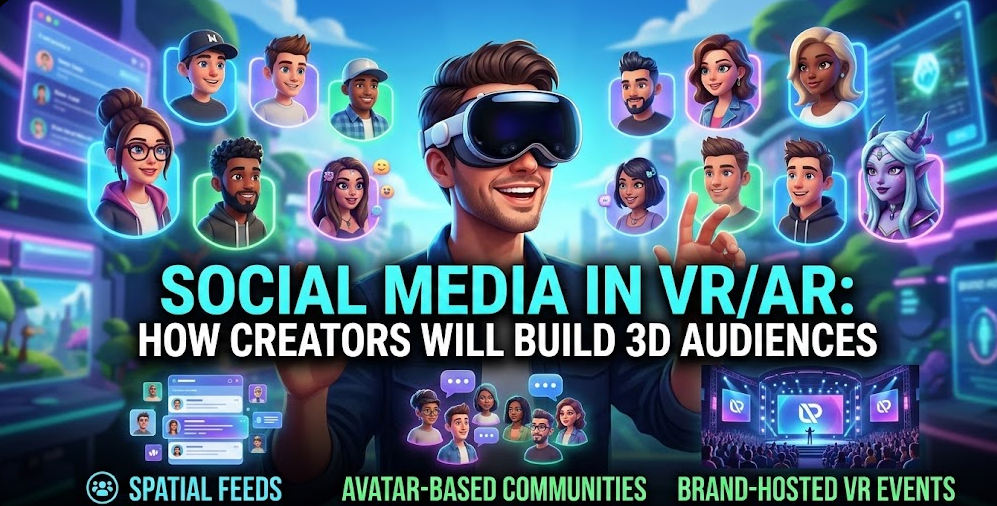
Understanding Spatial Feeds: The New Way to Consume Content
Spatial feeds represent a transformative shift in the way content is consumed within virtual and augmented reality (VR/AR) environments. Unlike traditional social media feeds that present information linearly, spatial feeds organize content in a three-dimensional space, allowing users to engage with materials in a dynamic and immersive manner. This three-dimensional interaction fosters a deeper connection between users and the content they consume, as it encourages exploration and participation rather than passive viewing.
In a spatial feed, information can be arranged in a way that aligns with the physical layout of the virtual environment, enabling users to navigate through content using their own movements. For example, users may walk around digital objects or environments, inspecting them from different angles and distances, which significantly alters their engagement experience. Creators can optimize this format by designing content that invites interaction, such as virtual exhibits or immersive storytelling that unfolds as the user moves through the space.
Platforms like Facebook Horizon and Spatial are pioneers in this field, showcasing how spatial feeds can cultivate a participatory audience experience. Users can create, share, and interact with content in real-time, enhancing the sense of presence and community that has often been lacking in two-dimensional social media. The implications for creators are profound; by utilizing spatial feeds, they can not only present their work but also create opportunities for audiences to engage with it actively, leading to richer feedback and interaction.
As the technology continues to evolve, the potential for spatial feeds in AR and VR settings will likely expand, introducing new ways for creators to engage audiences and foster connections. The use of three-dimensional content can catalyze a new era of social interaction, one where the consumer actively participates in the creation and dissemination of information, thereby reshaping the landscape of social media.
Avatar-Based Communities: Connecting Through Digital Personas
The emergence of avatar-based communities within virtual reality (VR) and augmented reality (AR) social media platforms has revolutionized how users connect and interact in digital spaces. Avatars serve as a critical representation of individuals, allowing users to embody a persona that may or may not resemble their real-world identity. This transformation facilitates a unique form of engagement, encouraging participants to express themselves in diverse ways, which, in turn, enhances social interaction.
Personalized avatars can be crafted to reflect distinct personality traits, styles, and preferences, bridging the gap between users and their digital counterparts. As individuals curate their virtual identities, they inherently contribute to the concept of self within these immersive environments. This identity exploration becomes a crucial element in establishing rapport among community members, as these digital personas often act as conduits for connection based on shared interests, hobbies, or experiences.
Communities formed around these avatar-based representations enable users to forge meaningful relationships in an expansive, boundless virtual landscape. Successful platforms, such as VRChat and Rec Room, exemplify how creators can develop engaging spaces that foster a sense of belonging among users. These environments not only provide opportunities for dialogue and collaboration but also serve as a breeding ground for creative expression and collaborative projects.
Furthermore, the vibrancy of avatar-based interactions encourages users to participate actively, contributing to lively discussions and fostering an inclusive atmosphere. As individuals share experiences through their avatars, they create a more profound connection that transcends geographical limitations. Consequently, these avatar-centric communities have the potential to shape the future of social media, transforming how individuals engage and connect within virtual realms.
Brand-Hosted VR Events: The Future of Interactive Marketing
Brand-hosted virtual reality (VR) events represent a groundbreaking shift in interactive marketing strategy, allowing brands to create immersive experiences that engage audiences in unprecedented ways. These events encompass a variety of formats, from product launches and interactive showcases to virtual concerts and exclusive brand experiences. By utilizing VR technology, brands can transport participants into entirely new environments, enhancing engagement through a sensory-rich experience that transcends traditional marketing methods.
The technology used in brand-hosted VR events is crucial for their success. High-quality VR headsets, 360-degree video, and advanced graphics play essential roles in crafting experiences that feel real and captivating. Besides the headsets, brands are leveraging augmented reality (AR) tools to complement VR experiences, thereby enabling participants to engage not only with virtual elements but also with the physical world around them. This synergistic relationship between VR and AR technologies enables creators to build 3D audiences that are both dynamic and interactive.
Experiential marketing finds new expression within these immersive environments, transforming how brands connect with their audiences. For instance, a cosmetics brand might host a virtual makeup masterclass, allowing participants to try products in a simulated environment or interact with skincare experts in real-time. Such events create memorable interactions that resonate deeply with the audience, fostering a sense of community and brand loyalty.
Successful examples of brand-hosted VR events include the likes of Nike’s “The Awesome Experience,” where attendees were able to design their own sneakers in a fully interactive virtual space. Another notable case is T-Mobile’s VR-based festival, allowing users worldwide to experience live music as if they were attending in person. These innovative strategies employed during immersive experiences not only elevate participation but also set a precedent for future marketing endeavors.
Preparing for the Future: Building 3D Assets and Engagement Strategies
As social media transitions into virtual and augmented reality, creators must proactively adapt to this evolution. Building 3D assets is foundational for developing engaging content in immersive environments. These assets, which include models, textures, and animations, should be meticulously crafted to ensure they convey depth and realism, thereby enhancing audience engagement. Utilizing tools such as Blender, Unity, or Unreal Engine allows creators to produce high-quality 3D models that facilitate interaction and storytelling.
One effective strategy involves crafting immersive mini-stories that leverage the strengths of 3D environments. Storytelling in such formats becomes a sensory experience, encouraging deeper emotional connections between the audience and the content. Creators should focus on narrative arcs that allow users to interact with the storyline, providing choices that affect outcomes. This interactive storytelling not only entertains but fosters community engagement, as audiences are more likely to share experiences when they feel personally invested.
Equally important is the implementation of ‘presence-based’ engagement strategies. This concept revolves around creating a sense of being there, encapsulating users into a shared space that feels real. Techniques such as spatial audio and haptic feedback significantly enhance this experience, encouraging users to participate actively rather than passively consume content. For instance, including live events within a 3D space or facilitating direct interactions with creators can significantly boost engagement. Moreover, regular feedback from users can guide content refinement and strategy adjustments, ensuring that creators remain aligned with audience preferences.
Incorporating these practices into a creator’s workflow will not only prepare them for the future of social media in VR and AR but also promote a proactive approach to audience engagement. By developing the necessary skills and leveraging the right tools, creators can transform their approaches and set new standards in virtual experiences.