

Category: Emerging & Next-Gen Tech

  • Prompt Engineering Profits: Turn AI Trends into 2026 Side Income

    Prompt Engineering Profits: Turn AI Trends into 2026 Side Income

    Artificial intelligence is transforming how people work online. One of the most powerful new skills emerging from the AI revolution is prompt engineering. In 2026, businesses, creators, and developers are paying real money for well-crafted prompts that generate better results from AI systems.

    If you’re looking for a modern AI side hustle, learning prompt engineering can become a surprisingly profitable opportunity. From selling prompts online to building automation tools, this skill can generate steady digital income.

    Table of Contents

    What is Prompt Engineering?

    Prompt engineering is the practice of designing structured instructions that guide AI systems to generate high-quality outputs. These prompts can be used for writing articles, generating code, creating images, designing marketing campaigns, and much more.

    Platforms like OpenAI, Anthropic, and HuggingFace are driving massive adoption of AI tools across industries.

    However, most people still struggle to write prompts that produce consistent results. This creates an opportunity for skilled prompt engineers to monetize their expertise.

    Why Prompt Engineering is Profitable in 2026

    The AI economy is expanding rapidly. Businesses are adopting AI to reduce costs, automate content creation, and accelerate product development.

    According to research from McKinsey, AI adoption is expected to add trillions of dollars to the global economy.

    As companies adopt AI tools, they need specialists who can optimize prompts for tasks such as:

    • Marketing copy generation
    • SEO article creation
    • AI image generation
    • Automated coding
    • Customer support automation

    This demand is why prompt engineering is becoming one of the most promising AI side income opportunities in 2026.

    5 Ways to Make Money with Prompt Engineering

    1. Sell Prompts on Marketplaces

    Online marketplaces allow creators to sell high-quality prompts. Some popular platforms include:

    A single premium prompt can sell for $5 to $50 depending on its value.

    2. Build Prompt Libraries

    Another profitable strategy is creating niche prompt packs such as:

    • SEO blog prompts
    • YouTube script prompts
    • AI image prompts
    • Startup idea generators

    These bundles can generate recurring income through digital downloads.

    3. Offer Prompt Engineering Services

    Businesses often need custom prompts for their workflows. Freelancers can offer prompt optimization services on platforms like:

    Some prompt engineers earn hundreds of dollars per project.

    4. Build AI Automation Tools

    Prompt engineering can power automation workflows using tools like:

    • Zapier AI automation
    • ChatGPT API integrations
    • AI customer support bots

    Automation products can become scalable digital businesses.

    5. Create AI Content Products

    You can also monetize prompts by building AI-generated products such as:

    • ebooks
    • blog templates
    • course materials
    • marketing frameworks

    Many creators use this strategy to build passive income streams.

    Best AI Tools for Prompt Engineers

    To succeed in prompt engineering, it helps to master the most powerful AI tools available today.

    • ChatGPT
    • Claude AI
    • Midjourney
    • DALL-E
    • Stable Diffusion

    Experimenting with different models helps prompt engineers understand how AI responds to various instructions.

    How to Build a $1000/Month AI Side Income

    Many beginners wonder if prompt engineering can actually generate real income. The answer is yes, but it requires consistency.

    A simple strategy might look like this:

    • Sell 100 prompts at $10 each
    • Sell prompt bundles for $25
    • Offer freelance prompt optimization
    • Create digital AI prompt courses

    By combining multiple revenue streams, it is possible to build a sustainable online income.

    Future of Prompt Engineering

    Prompt engineering will continue evolving as AI models become more advanced. In the future we may see specialized prompt roles such as:

    • AI marketing prompt specialists
    • AI coding prompt architects
    • AI automation designers

    Early adopters who develop these skills now could benefit significantly as AI becomes a core part of every digital industry.

    Frequently Asked Questions

    What is prompt engineering?

    Prompt engineering is the process of designing structured instructions that guide AI systems to generate high-quality responses.

    Can you make money selling AI prompts?

    Yes. Many creators earn money by selling prompts, prompt packs, automation workflows, and consulting services.

    Is prompt engineering a good side hustle in 2026?

    Prompt engineering is one of the fastest-growing AI skills and can generate side income through marketplaces, freelancing, and digital products.

    Do you need coding skills for prompt engineering?

    No. While coding can help with automation, many profitable prompts are created using simple structured instructions.

    Final Thoughts

    Prompt engineering is more than just a technical skill. It is becoming a powerful digital asset in the AI economy. As AI adoption grows, those who master prompt design can unlock multiple income opportunities.

    If you’re interested in more AI trends, automation tools, and digital income strategies, explore more resources on Shubscribe.
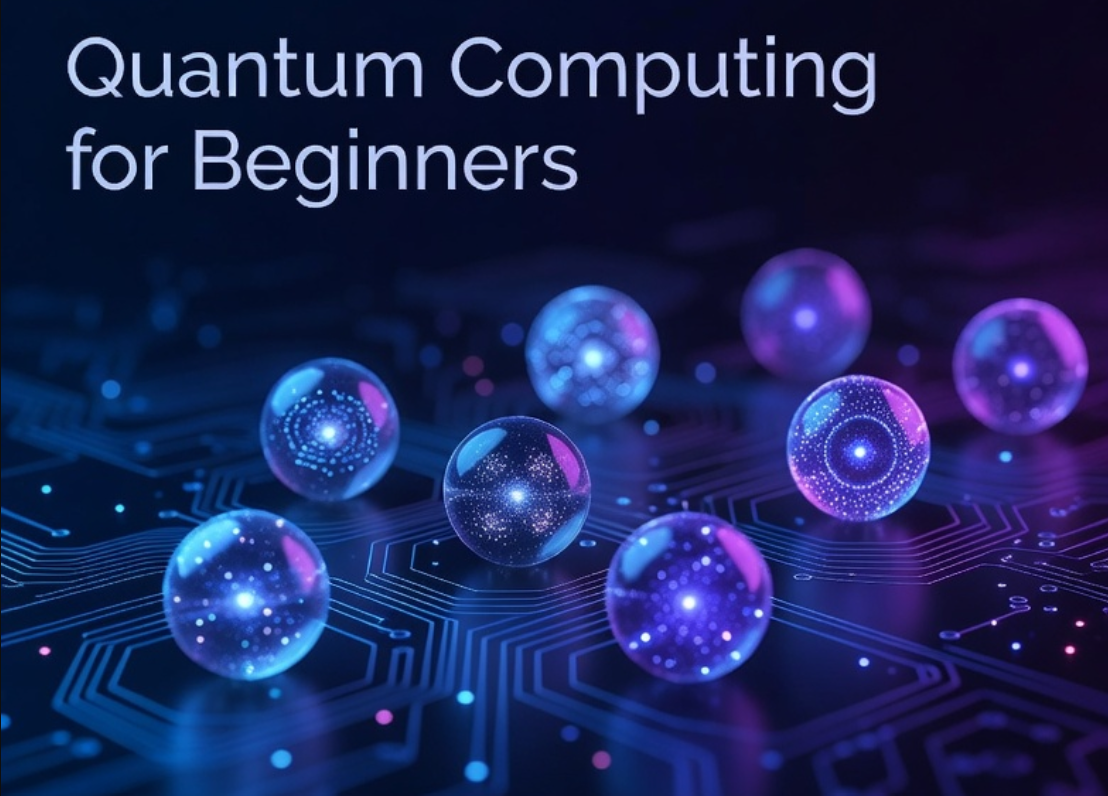
  • Quantum Computing for Beginners

    Quantum Computing for Beginners

    What is Quantum Computing?

    Quantum computing represents a revolutionary approach to processing information, diverging fundamentally from classical computing. Classical computers utilize bits as the smallest unit of data, where each bit can exist in one of two states, either 0 or 1. In contrast, quantum computing employs quantum bits, or qubits, which are capable of existing in multiple states simultaneously due to the principles of superposition. This unique characteristic allows quantum computers to perform complex calculations more efficiently than their classical counterparts.

    Superposition is a pivotal concept in quantum mechanics, whereby a qubit can be in a state of 0, 1, or both at the same time. This property exponentially increases the computational power of quantum systems, enabling them to process vast amounts of data concurrently. For instance, while a classical computer must operate sequentially through each state, a quantum computer can evaluate multiple possibilities at once, significantly speeding up certain computations.

    Another crucial principle of quantum computing is entanglement, which involves a phenomenon where qubits become interconnected, such that the state of one qubit can instantaneously influence the state of another, regardless of the distance between them. This trait paves the way for more sophisticated processing techniques and enhanced data security, promising a new frontier in computational capabilities.Overall, quantum computing holds immense potential to revolutionize a variety of fields, from cryptography and material science to artificial intelligence, making it a significant leap beyond classical computing. As researchers continue to unravel the complexities of quantum mechanics and improve qubit stability, the role of quantum computing in our technological landscape is set to expand dramatically.

    How Quantum Computers Work

    Quantum computers represent a revolutionary approach to computation, utilizing the principles of quantum mechanics to perform calculations in ways that classical computers cannot. At the heart of quantum computing are qubits, which serve as the fundamental units of information. Unlike classical bits that can be either 0 or 1, qubits can exist in multiple states simultaneously due to their unique property known as superposition. This ability allows quantum computers to process vast amounts of data concurrently, vastly enhancing computational efficiency.

    In addition to superposition, qubits exhibit another vital property termed entanglement. When qubits become entangled, the state of one qubit becomes directly related to the state of another, regardless of the physical distance separating them. This relationship allows for intricate operations that classical computers struggle to replicate. Quantum gates, similar to logic gates in classical computing, manipulate the states of qubits through various operations, enabling complex calculations and algorithm executions that exploit both superposition and entanglement.

    There are several specific algorithms designed for quantum computing, such as Shor’s algorithm for factoring large numbers and Grover’s algorithm for searching unsorted databases. These algorithms apply the distinct properties of qubits to solve problems that would typically require extensive time on classical computers. As quantum computers progress, the implications for fields such as cryptography, optimization, and artificial intelligence become increasingly profound. Understanding how quantum computers operate provides a glimpse into a computational future that diverges sharply from traditional methods, with the potential to revolutionize numerous industries and research domains.

    Applications of Quantum Computing

    Quantum computing holds immense potential across various industries, with the capability to solve problems currently deemed impractical or impossible for classical computers. One of the most compelling applications lies in cryptography. Traditional encryption methods rely on the computational difficulty of certain mathematical problems, such as factoring large numbers. However, quantum computers can perform these calculations exponentially faster using algorithms like Shor’s algorithm, which could potentially break widely used encryption protocols such as RSA. This prospect raises significant concerns about data security and has prompted researchers to develop quantum-resistant encryption techniques.

    Another promising area is drug discovery, where quantum computing can significantly accelerate the simulation of molecular interactions. By leveraging quantum superposition and entanglement, researchers can model complex molecular structures and processes that are crucial for understanding diseases and developing new drugs. A real-world example includes efforts by pharmaceutical companies collaborating with quantum computing firms to identify new compounds that target specific biological pathways, resulting in faster and more cost-effective drug development.

    Optimization problems, such as those found in logistics and supply chain management, also stand to benefit from quantum computing. Businesses often face challenges in optimizing routes, inventory, and resource allocation. Utilizing quantum algorithms can help find the most efficient solutions much quicker than classical methods. For instance, companies like D-Wave Systems are already working with clients to address real-world optimization problems, showcasing the potential impact of quantum technology in improving operational efficiency.

    As advancements in quantum computing continue, the excitement grows among scientists and industry professionals alike. These applications represent just a fraction of the vast opportunities that quantum computing can bring, making it crucial for beginners to keep abreast of developments in this fast-evolving field.

    Challenges and Future of Quantum Computing

    Quantum computing, while offering unprecedented capabilities, presents a multitude of challenges that are critical for the technology’s advancement. One of the most significant obstacles is technical limitations, particularly related to qubit stability and coherence time. Qubits, the fundamental units of quantum information, are susceptible to environmental noise and thermal fluctuations, leading to errors that can compromise computation. As a result, developing stable qubits that can maintain their states long enough to execute complex operations remains a key focus for researchers.

    Scalability is another issue that the quantum computing industry faces. Current quantum processors typically operate with a limited number of qubits, and scaling these systems while maintaining qubit integrity and interaction fidelity is a formidable task. Researchers are exploring various architectures, including superconducting qubits, trapped ions, and topological qubits, to uncover the most viable path to achieving a practical, large-scale quantum computer.

    Error correction is vital for the reliability of quantum computations. Unlike classical error correction, which can often be straightforward, quantum error correction presents unique difficulties due to the no-cloning theorem and the delicate nature of quantum states. Ongoing research is focused on developing efficient quantum error correction codes that can help mitigate the errors stemming from qubit instability and environmental disturbances.

    Looking to the future, the evolution of quantum computing could potentially revolutionize various sectors, including cryptography, drug discovery, materials science, and complex system simulations. As multiple companies and research institutions continue to invest in quantum technology, advancements in quantum algorithms, hardware improvements, and the integration of quantum computing with classical systems will likely pave the way for practical applications. The implications for society are profound, ushering in an era of problem-solving capabilities that were previously thought unattainable.