Example (Fitness Niche): Slide 1: Stop Doing These 3 Fat Loss Mistakes ❌ Slide 2: Skipping protein Slide 3: Only doing cardio Slide 4: Not tracking calories Caption: “Save this before your next workout 💪”
2. Quick Tip Reel
Example (Finance Niche): Video Text: “Want to improve your credit score?” Hook: “Do this one thing today 👇” Tip: Pay your credit card bill before the statement date. Caption: “Small changes = big financial wins.”
3. Step-by-Step Tutorial
Example (Digital Marketing): “How to get your first 1,000 followers on Instagram” Slide breakdown format.
💼 Business Post Ideas (With Examples)
4. Product Demo
Example (Skincare Brand): Before applying serum → After 7 days. Caption: “Visible glow in 7 days ✨”
5. Customer Testimonial
Screenshot of DM: “Your course helped me land my first client!” Caption: “Real results from real students 🙌”
6. Problem–Solution Post
Slide 1: Struggling with low engagement? Slide 2: You’re not using hooks. Slide 3: Here are 5 powerful hooks.
7. Limited-Time Offer
Graphic: “48-Hour Flash Sale” Caption: “Comment ‘SALE’ and we’ll DM you the link.”
🎥 Reel Content Ideas (With Examples)
8. Day in My Life
Clip 1: Morning coffee Clip 2: Laptop work Clip 3: Gym Caption: “Building my dream life one day at a time.”
9. Before & After Transformation
Example: Website redesign Caption: “From basic to premium 💻🔥”
10. Trending Audio + Relatable Text
Text Overlay: “Me pretending I understand taxes.”
💡 Personal Brand Ideas (With Examples)
11. Storytelling Post
Image: You working late Caption: “Two years ago, I had zero clients. Today, I run a profitable business. Consistency changed everything.”
12. Unpopular Opinion
“Posting daily is overrated. Posting strategically wins.”
13. Lessons Learned Post
“5 Things I Wish I Knew Before Starting Online Business.”
📊 Engagement Boosting Posts
14. This or That
Graphic: Coffee ☕ vs Tea 🍵 Caption: “Comment your choice!”
15. Fill in the Blank
“2026 will be the year I ______.”
16. Ask Me Anything
“Drop your Instagram growth questions below 👇”
17. Myth-Busting Post
“Myth: You need 100K followers to make money. Truth: 1,000 loyal followers is enough.”
📸 Content That Builds Trust
18. Behind-the-Scenes
Packing orders Editing videos Designing posts
19. Workspace Photo
Caption: “Where the magic happens ✨”
20. Milestone Celebration
“Just hit 10K followers! Thank you 🙏”
🎯 Lead Generation Ideas
21. Free Resource Post
“Comment ‘GUIDE’ and I’ll send you my free checklist.”
22. Case Study
“How we increased engagement by 220% in 30 days.”
23. Giveaway Post
“Follow + Like + Tag 2 friends to win!”
🧠 High-Save Content Ideas
24. Checklist Post
“Instagram Caption Formula: Hook Value CTA”
25. Content Calendar Template
Share a weekly posting plan.
26. Niche Statistics
“Video posts get 38% more engagement than images.”
❤️ Community-Building Ideas
27. Share a Failure
“What didn’t work for me…”
28. Feature a Follower
“Creator of the Week 👏”
29. Collaboration Announcement
“Excited to collaborate with…”
30. Motivational Quote (Branded Design)
“Small steps daily > Big dreams someday.”
Bonus: Simple Weekly Posting Plan
Monday – Educational Carousel Tuesday – Reel Wednesday – Testimonial Thursday – Relatable Post Friday – Offer or CTA Saturday – Personal Story Sunday – Community Question
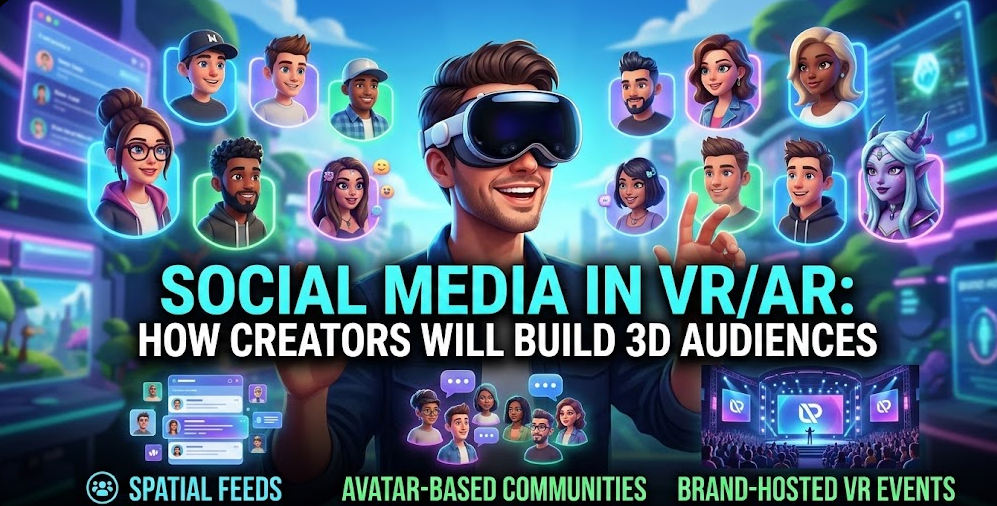
Understanding Spatial Feeds: The New Way to Consume Content
Spatial feeds represent a transformative shift in the way content is consumed within virtual and augmented reality (VR/AR) environments. Unlike traditional social media feeds that present information linearly, spatial feeds organize content in a three-dimensional space, allowing users to engage with materials in a dynamic and immersive manner. This three-dimensional interaction fosters a deeper connection between users and the content they consume, as it encourages exploration and participation rather than passive viewing.
In a spatial feed, information can be arranged in a way that aligns with the physical layout of the virtual environment, enabling users to navigate through content using their own movements. For example, users may walk around digital objects or environments, inspecting them from different angles and distances, which significantly alters their engagement experience. Creators can optimize this format by designing content that invites interaction, such as virtual exhibits or immersive storytelling that unfolds as the user moves through the space.
Platforms like Facebook Horizon and Spatial are pioneers in this field, showcasing how spatial feeds can cultivate a participatory audience experience. Users can create, share, and interact with content in real-time, enhancing the sense of presence and community that has often been lacking in two-dimensional social media. The implications for creators are profound; by utilizing spatial feeds, they can not only present their work but also create opportunities for audiences to engage with it actively, leading to richer feedback and interaction.
As the technology continues to evolve, the potential for spatial feeds in AR and VR settings will likely expand, introducing new ways for creators to engage audiences and foster connections. The use of three-dimensional content can catalyze a new era of social interaction, one where the consumer actively participates in the creation and dissemination of information, thereby reshaping the landscape of social media.
Avatar-Based Communities: Connecting Through Digital Personas
The emergence of avatar-based communities within virtual reality (VR) and augmented reality (AR) social media platforms has revolutionized how users connect and interact in digital spaces. Avatars serve as a critical representation of individuals, allowing users to embody a persona that may or may not resemble their real-world identity. This transformation facilitates a unique form of engagement, encouraging participants to express themselves in diverse ways, which, in turn, enhances social interaction.
Personalized avatars can be crafted to reflect distinct personality traits, styles, and preferences, bridging the gap between users and their digital counterparts. As individuals curate their virtual identities, they inherently contribute to the concept of self within these immersive environments. This identity exploration becomes a crucial element in establishing rapport among community members, as these digital personas often act as conduits for connection based on shared interests, hobbies, or experiences.
Communities formed around these avatar-based representations enable users to forge meaningful relationships in an expansive, boundless virtual landscape. Successful platforms, such as VRChat and Rec Room, exemplify how creators can develop engaging spaces that foster a sense of belonging among users. These environments not only provide opportunities for dialogue and collaboration but also serve as a breeding ground for creative expression and collaborative projects.
Furthermore, the vibrancy of avatar-based interactions encourages users to participate actively, contributing to lively discussions and fostering an inclusive atmosphere. As individuals share experiences through their avatars, they create a more profound connection that transcends geographical limitations. Consequently, these avatar-centric communities have the potential to shape the future of social media, transforming how individuals engage and connect within virtual realms.
Brand-Hosted VR Events: The Future of Interactive Marketing
Brand-hosted virtual reality (VR) events represent a groundbreaking shift in interactive marketing strategy, allowing brands to create immersive experiences that engage audiences in unprecedented ways. These events encompass a variety of formats, from product launches and interactive showcases to virtual concerts and exclusive brand experiences. By utilizing VR technology, brands can transport participants into entirely new environments, enhancing engagement through a sensory-rich experience that transcends traditional marketing methods.
The technology used in brand-hosted VR events is crucial for their success. High-quality VR headsets, 360-degree video, and advanced graphics play essential roles in crafting experiences that feel real and captivating. Besides the headsets, brands are leveraging augmented reality (AR) tools to complement VR experiences, thereby enabling participants to engage not only with virtual elements but also with the physical world around them. This synergistic relationship between VR and AR technologies enables creators to build 3D audiences that are both dynamic and interactive.
Experiential marketing finds new expression within these immersive environments, transforming how brands connect with their audiences. For instance, a cosmetics brand might host a virtual makeup masterclass, allowing participants to try products in a simulated environment or interact with skincare experts in real-time. Such events create memorable interactions that resonate deeply with the audience, fostering a sense of community and brand loyalty.
Successful examples of brand-hosted VR events include the likes of Nike’s “The Awesome Experience,” where attendees were able to design their own sneakers in a fully interactive virtual space. Another notable case is T-Mobile’s VR-based festival, allowing users worldwide to experience live music as if they were attending in person. These innovative strategies employed during immersive experiences not only elevate participation but also set a precedent for future marketing endeavors.
Preparing for the Future: Building 3D Assets and Engagement Strategies
As social media transitions into virtual and augmented reality, creators must proactively adapt to this evolution. Building 3D assets is foundational for developing engaging content in immersive environments. These assets, which include models, textures, and animations, should be meticulously crafted to ensure they convey depth and realism, thereby enhancing audience engagement. Utilizing tools such as Blender, Unity, or Unreal Engine allows creators to produce high-quality 3D models that facilitate interaction and storytelling.
One effective strategy involves crafting immersive mini-stories that leverage the strengths of 3D environments. Storytelling in such formats becomes a sensory experience, encouraging deeper emotional connections between the audience and the content. Creators should focus on narrative arcs that allow users to interact with the storyline, providing choices that affect outcomes. This interactive storytelling not only entertains but fosters community engagement, as audiences are more likely to share experiences when they feel personally invested.
Equally important is the implementation of ‘presence-based’ engagement strategies. This concept revolves around creating a sense of being there, encapsulating users into a shared space that feels real. Techniques such as spatial audio and haptic feedback significantly enhance this experience, encouraging users to participate actively rather than passively consume content. For instance, including live events within a 3D space or facilitating direct interactions with creators can significantly boost engagement. Moreover, regular feedback from users can guide content refinement and strategy adjustments, ensuring that creators remain aligned with audience preferences.
Incorporating these practices into a creator’s workflow will not only prepare them for the future of social media in VR and AR but also promote a proactive approach to audience engagement. By developing the necessary skills and leveraging the right tools, creators can transform their approaches and set new standards in virtual experiences.